
279-NASA – SDO’s Ultra-high Definition View of 2012 Venus Transit
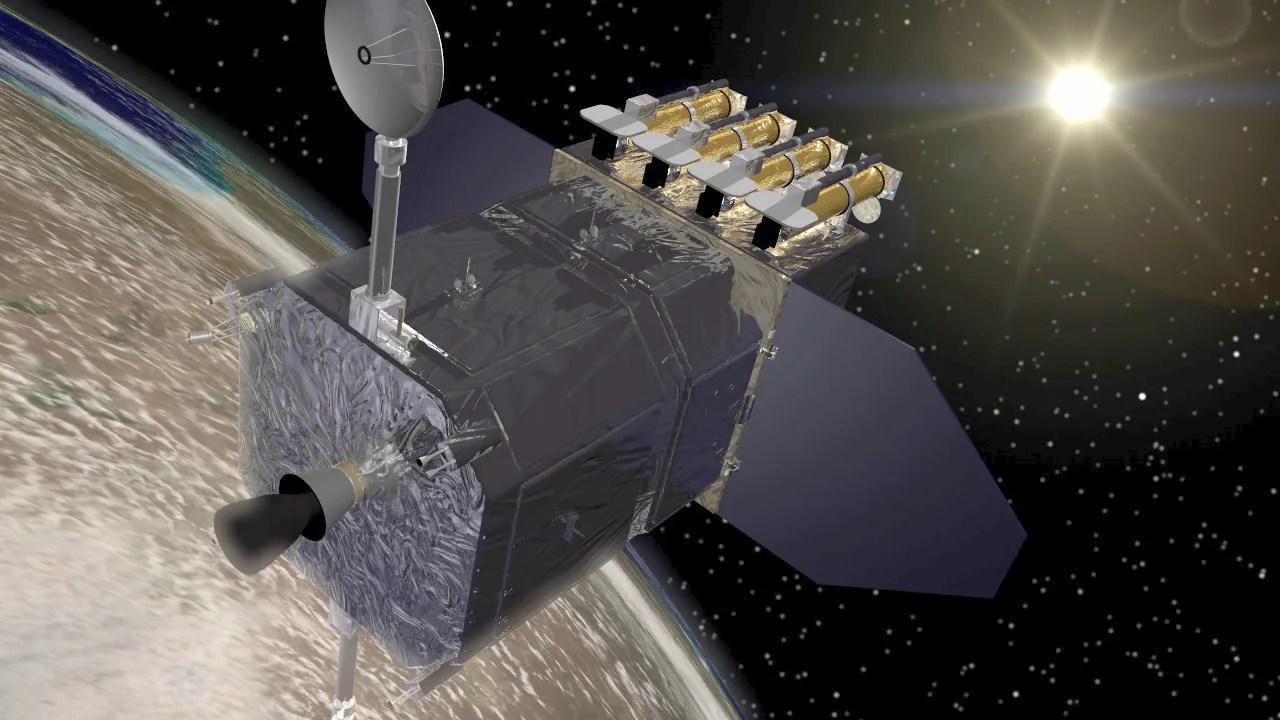
The Solar Dynamics Observatory (SDO) NASA mission was developed to observe the Sun and enhance our understanding of our Solar System’s star. It was launched on February 11, 2010, as part of NASA’s Living With a Star (LWS) program. The program aims to understand and effectively address aspects of the connected Sun-Earth system that directly affect life and society. The purpose of the Solar Dynamics Observatory is to understand the influence of the Sun on the Earth and near-Earth space.
Launched on Feb. 11, 2010, the Solar Dynamics Observatory, or SDO, is the most advanced spacecraft ever designed to study the sun. During its five-year mission, it will examine the sun’s atmosphere, magnetic field and also provide a better understanding of the role the sun plays in Earth’s atmospheric chemistry and climate. SDO provides images with resolution 8 times better than high-definition television and returns more than a terabyte of data each day.
On June 5 2012, SDO collected images of the rarest predictable solar event–the transit of Venus across the face of the sun. This event happens in pairs eight years apart that are separated from each other by 105 or 121 years. The last transit was in 2004 and the next will not happen until 2117.
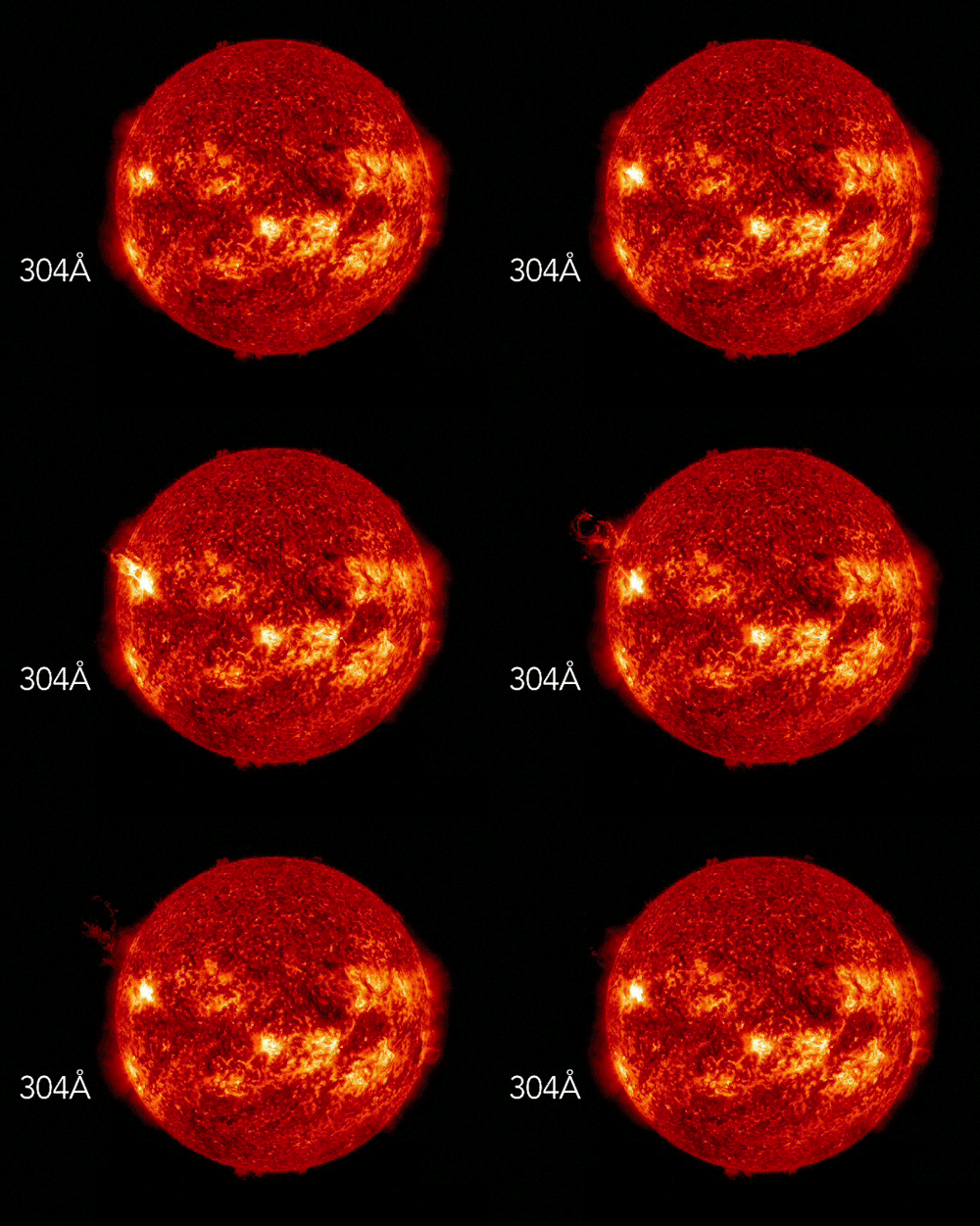
The videos and images displayed here are constructed from several wavelengths of extreme ultraviolet light and a portion of the visible spectrum. The red colored sun is the 304 angstrom ultraviolet, the golden colored sun is 171 angstrom, the magenta sun is 1700 angstrom, and the orange sun is filtered visible light. 304 and 171 show the atmosphere of the sun, which does not appear in the visible part of the spectrum.
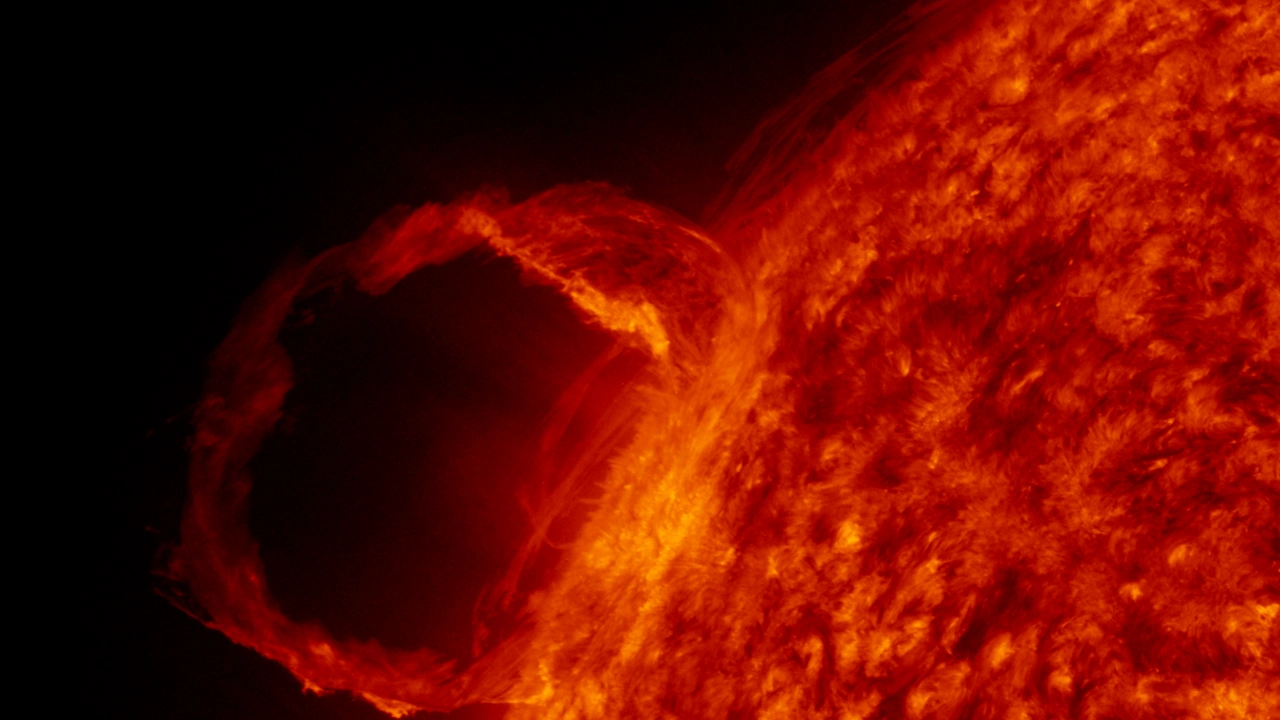
A picture recording a Hyder flare which occurred over a three-hour span, on November 1, 2014.
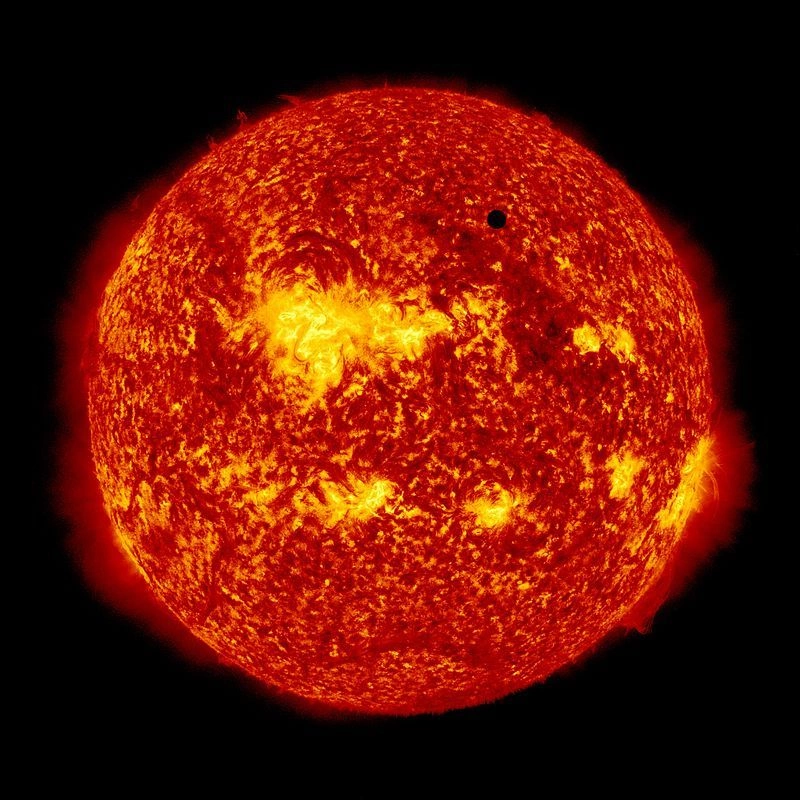
Stormy sun paints the world red as it reaches peak activity.