
- This event has passed.
267-NASA – Magnificent Eruption in Full HD
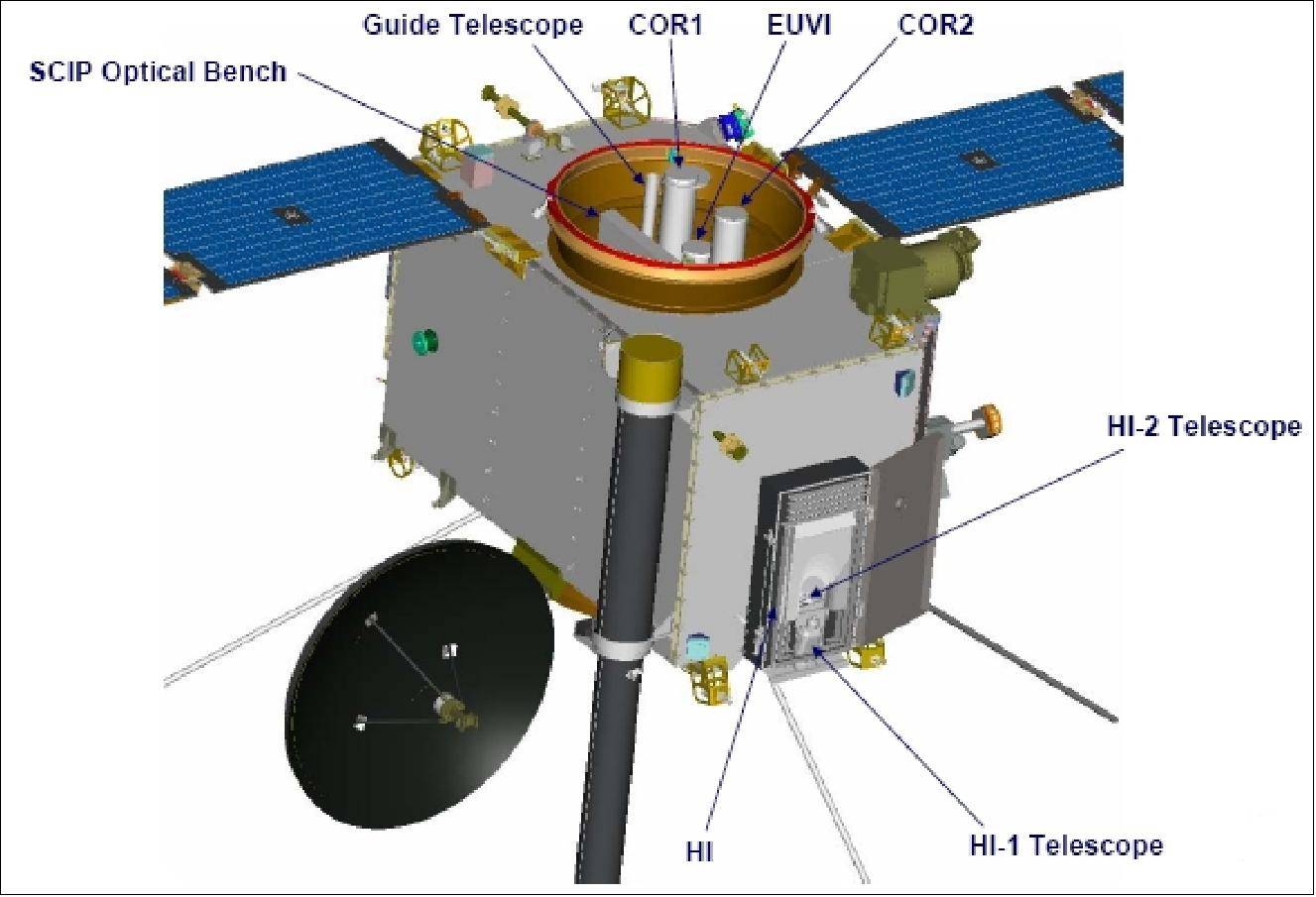
STEREO (Solar-Terrestrial Relations Observatory)
The STEREO mission is a strategic element of NASA’s Sun-Earth Connection program, a multi-institutional and international collaboration involving participants from France, Germany, the Netherlands, Belgium, Switzerland, the United States, and the United Kingdom. STEREO is the third mission of NASA’s Solar Terrestrial Probes program. The overall objective is to increase the understanding of the origin and consequences of CMEs (Coronal Mass Ejections).
On August 31, 2012 a long filament of solar material that had been hovering in the sun’s atmosphere, the corona, erupted out into space at 4:36 p.m. EDT. The coronal mass ejection, or CME, traveled away from the sun at over 900 miles per second. This movie shows the ejection from a variety of viewpoints as captured by NASA’s Solar Dynamics Observatory (SDO), NASA’s Solar Terrestrial Relations Observatory (STEREO), and the joint ESA/NASA Solar Heliospheric Observatory (SOHO).
While scientists long appreciated the power and importance of coronal mass ejections (CMEs), they didn’t fully understand how they form, what their structure and sizes are, or how they evolve as they blast off the Sun and propagate through space.
Launched in 2006, the STEREO mission is addressing these unknowns and providing advance warnings for space weather forecasting. STEREO is the third mission in NASA’s Solar Terrestrial Probes program, answering fundamental questions about the nature of space and the flow of matter and energy throughout the solar system.
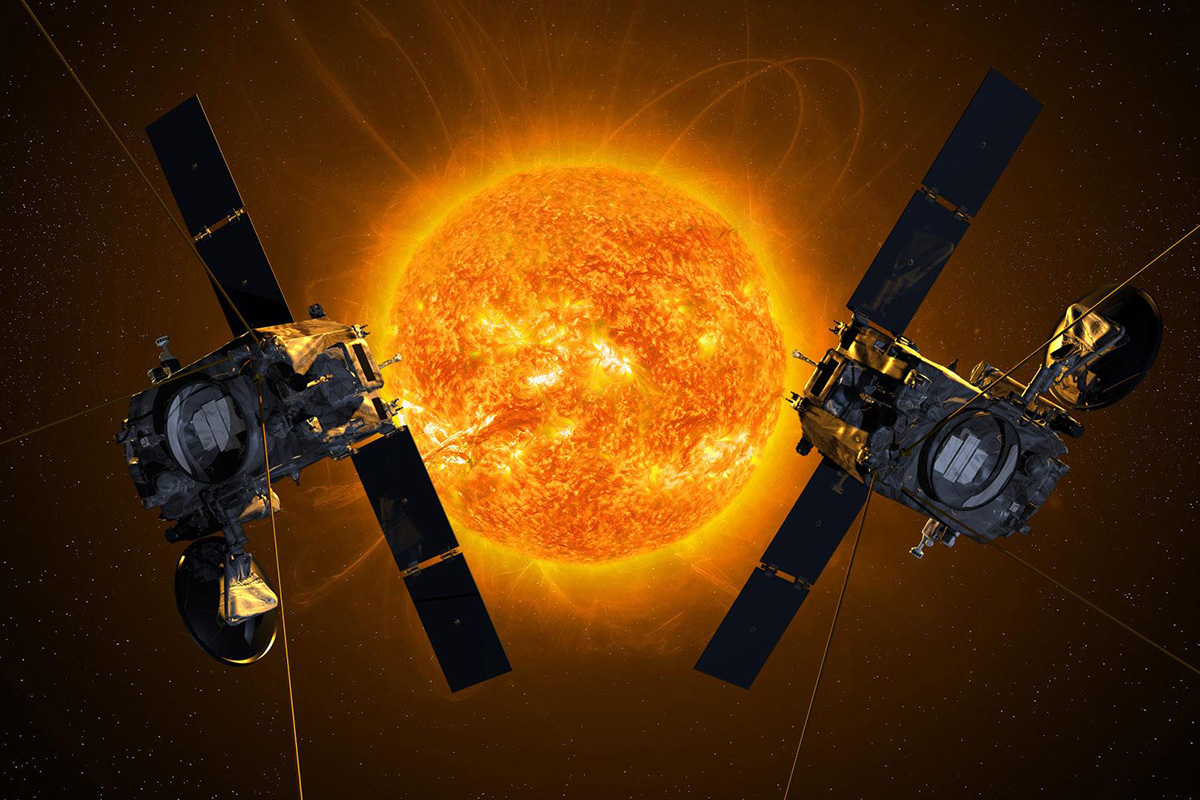
The mission consists of two nearly identical space-based observatories: STEREO-A and STEREO-B, both built by APL. One spacecraft is placed ahead of Earth’s orbit while the other is placed behind, allowing the probes to capture 3D images of the Sun and interplanetary space to study the origin, propagation and evolution of CMEs. This configuration also enabled investigations of the 3D structure of the magnetic fields in the corona as well as the first studies of the entire Sun, including its far side.
Communications with STEREO-B were officially lost in September 2014. STEREO-A remains operational.