
363-When We Were Apollo
The Apollo program, also known as Project Apollo, was the United States human spaceflight program carried out by the National Aeronautics and Space Administration, which succeeded in preparing and landing the first men on the Moon in 1969.
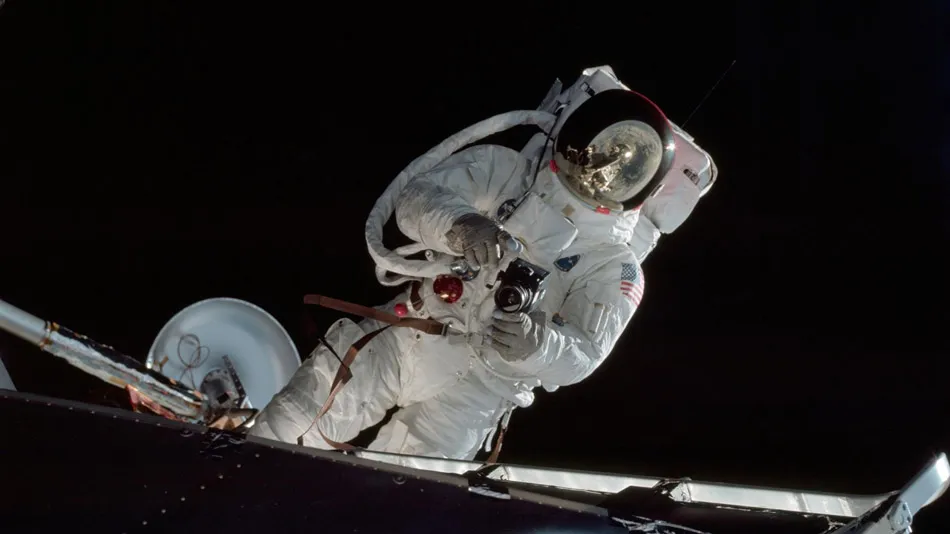
Astronaut Russell L. Schweickart, lunar module pilot, operates a 70mm Hasselblad camera during his extravehicular activity on the fourth day of the Apollo 9 earth-orbital mission. The Command/Service Module and the Lunar Module 3 “Spider” are docked. This view was taken form the Command Module “Gumdrop”. Schweickart, wearing an Extravehicular Mobility Unit (EMU), is standing in “golden slippers” on the Lunar Module porch. On his back, partially visible, are a Portable Life Support System (PLSS) and an Oxygen Purge System (OPS).
Photo Credit: NASA
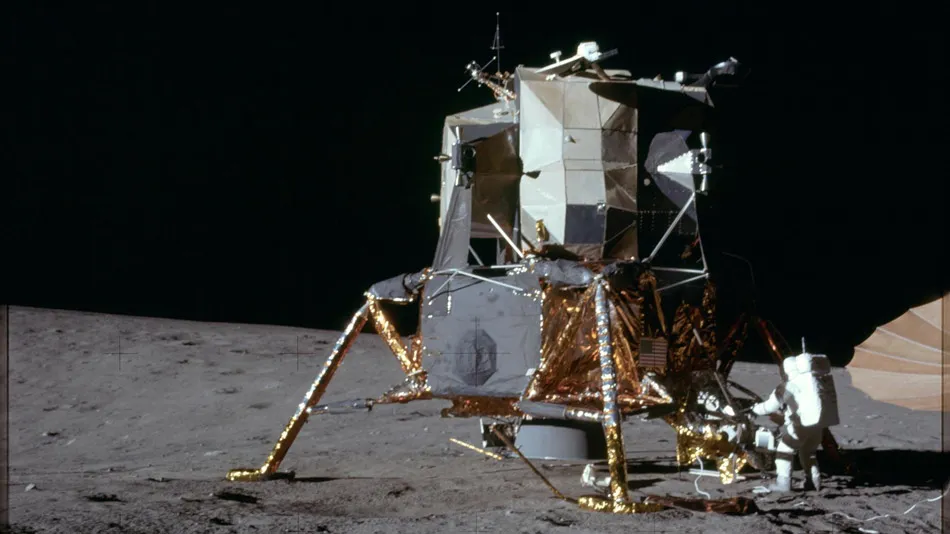
Astronaut Alan L. Bean, lunar module pilot for the Apollo 12 lunar landing mission, works at the Modular Equipment Stowage Assembly (MESA) on the Apollo 12 Lunar Module (LM) during the mission’s first extravehicular activity, (EVA) on Nov. 19, 1969.
Photo Credit: NASA
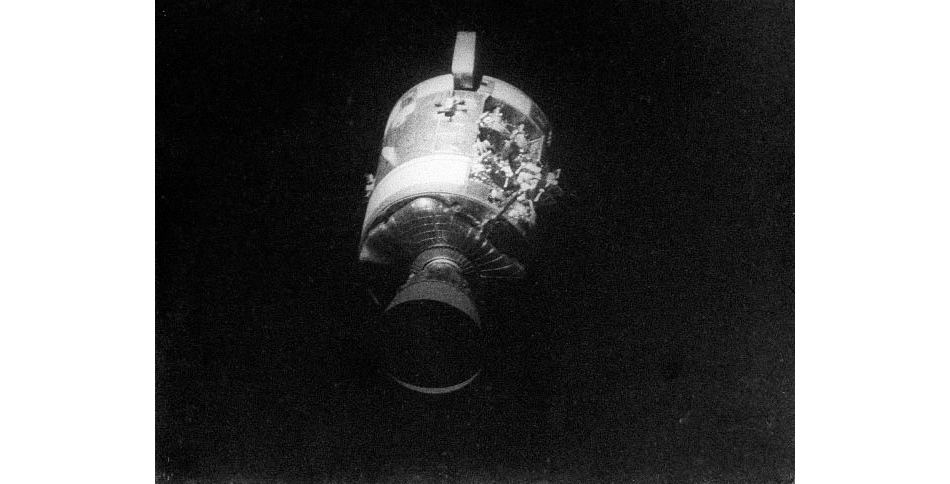
This view of the severely damaged Apollo 13 Service Module (SM) was photographed from the Lunar Module/Command Module (LM/CM) following SM jettisoning.
Photo Credit: NASA
Apollo 13 has been called a “successful failure,” because the crew never landed on the Moon, but they made it home safely after an explosion crippled their ship. A switch and insulation, which should have been modified during an upgrade to one oxygen tank, were damaged during a test of that tank during construction. When the associated heater was turned on during flight, the tank exploded, depleting almost all of the power from the command module and forcing the crew to use the lunar module as a lifeboat. Jim Lovell, Fred Haise and Jack Swigert came home safely thanks to the mission control team’s improvised procedures and their own ability to implement them.
Launch: April 11, 1970; splashdown: April 17
Audio: Apollo 13 “Houston we’ve had a problem”