
14-It’s Time to Change Hubble’s Clock
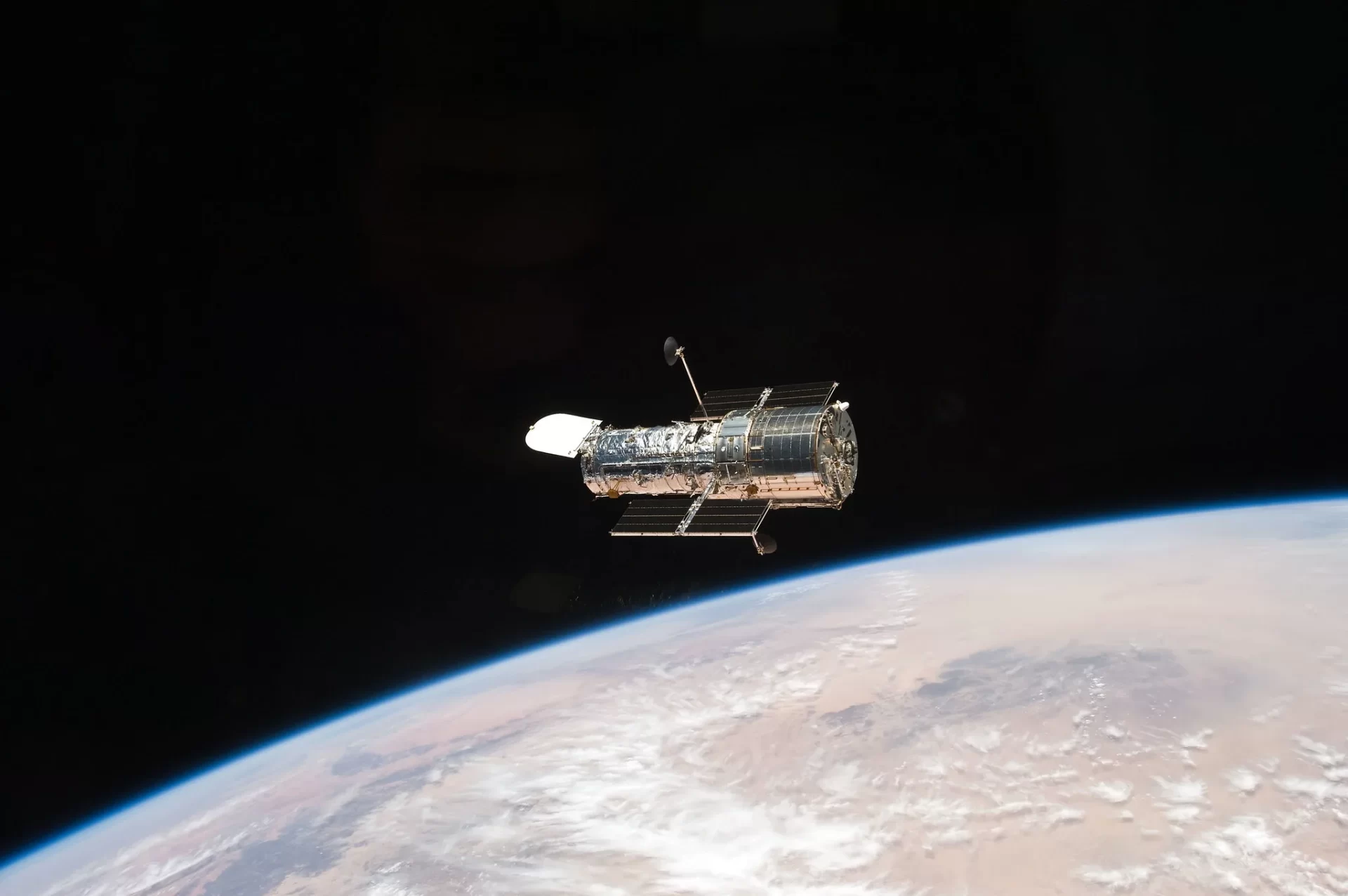
Hubble acts as a time machine, allowing us to see distant objects as they appeared in the past.
NASA.
Remember that Y2K thing a few years ago? Where everyone was afraid the world was going to end because computer programmers saved space by putting dates as… 77 for 1977, 85 for 1985, Or 90 for 1990? But then it became clear that when the year 2000 finally rolled around all of the computers would think it was actually 00. Or the year 1900.
Well, it turns out Hubble has something similar, only Hubble’s clock restarts every 6,213 days, 18 hours, 48 minutes, and 31.875 seconds. Or roughly every 17 years for those of you who like counting.
That’s because Hubble’s computers have a different way of tracking time than we have here on the ground. You’d think it would be as simple as synching our ground clocks with Hubble’s personal timepiece, but you’d be surprised!
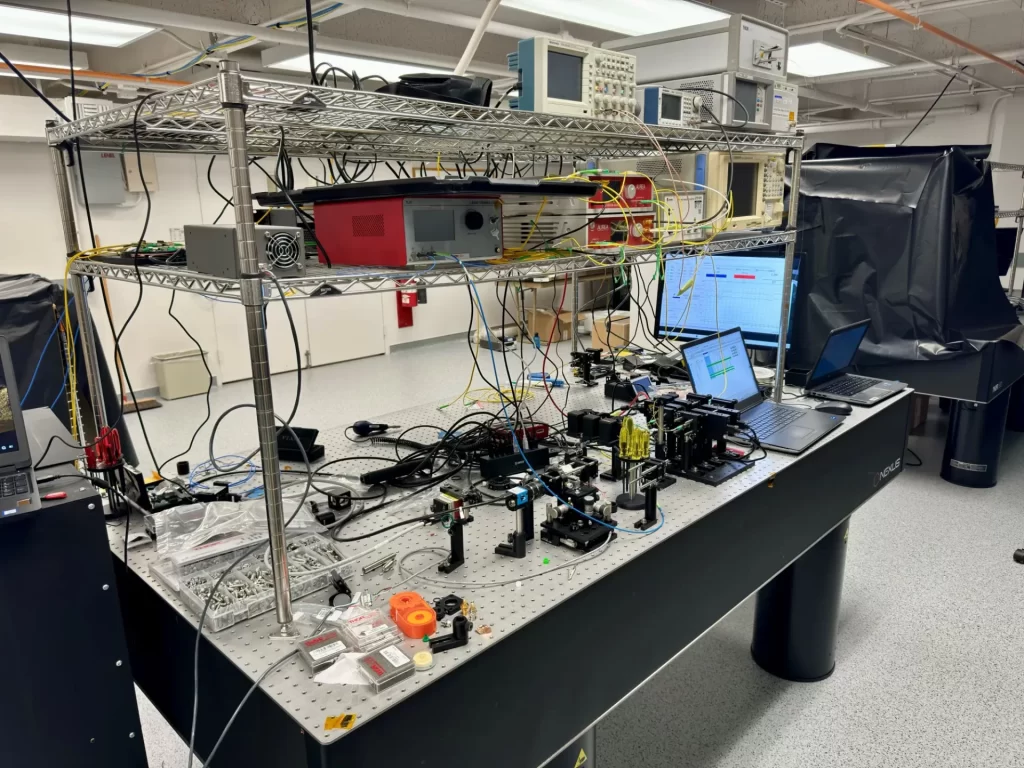
Work on the quantum clock synchronization protocol takes place in this lab at NASA’s Goddard Space Flight Center in Greenbelt, Md.
NASA/Matthew Kaufman.
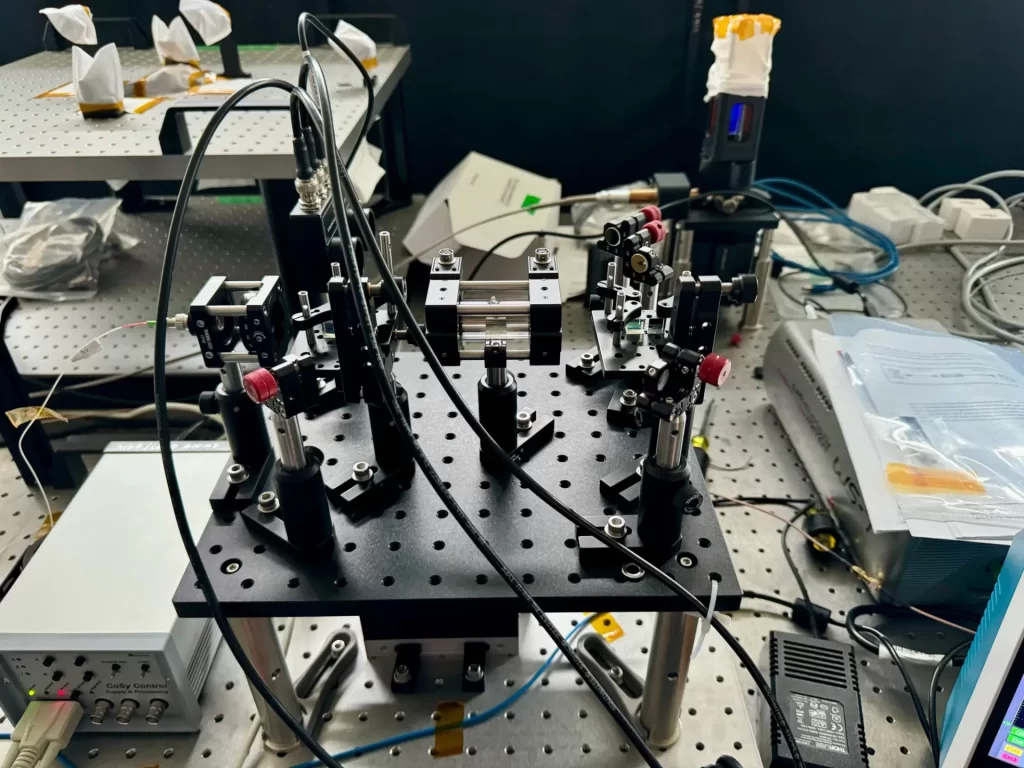
The Optical Atomic Strontium Ion Clock is a higher-precision atomic clock that is small enough to fit on a spacecraft.
NASA/Matthew Kaufman.