
- This event has passed.
224-NASA – Hubble’s STIS: The Quest for Renewed Exploration
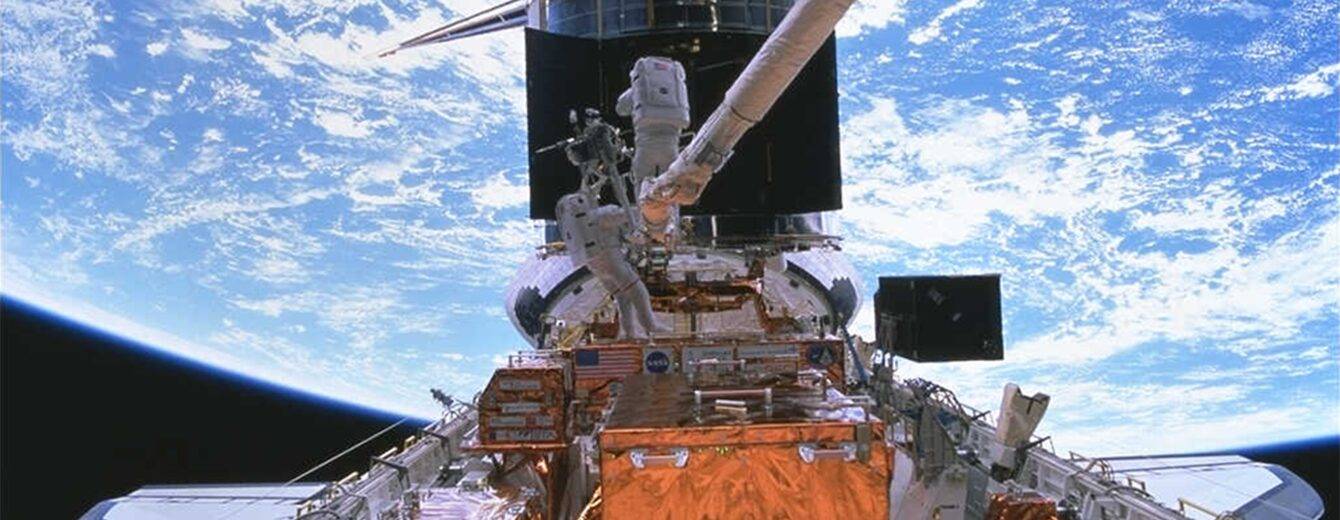
Twenty years ago, astronauts on the second servicing mission to the Hubble Space Telescope installed the Space Telescope Imaging Spectrograph (STIS) aboard Hubble. This pioneering instrument combines a camera with a spectrograph, which provides a “fingerprint” of a celestial object’s temperature, chemical composition, density, and motion. STIS also reveals changes in the evolving universe and leads the way in the field of high-contrast imaging. The versatile instrument is sensitive to a wide range of wavelengths of light, from ultraviolet through the optical and into the near-infrared. From studying black holes, monster stars, and the intergalactic medium, to analyzing the atmospheres of worlds around other stars, STIS continues its epic mission to explore the universe.
The Space Telescope Imaging Spectrograph (STIS) is a versatile “combi-instrument” taking advantage of modern technologies. It combines a camera with a spectrograph, and covers a wide range of wavelengths from the near-infrared region into the ultraviolet.
Space Telescope Imaging Spectrograph (STIS), the most versatile spectrograph ever to fly on Hubble, ceased operations in August 2004 due to the failure of its power supply. In order to restore STIS to operational status, astronauts will perform a never-before-attempted on-orbit replacement of an electronics board inside STISs main electronics box. On Earth this operation is relatively simple, but in space many challenges confront the astronauts as they work to replace the failed board including working to remove 111 tiny, non-captive screws with astronaut gloves.
The Importance of STIS in Observing Such Phenomena.